Posts

Chandragupta Maurya - The first emperor to unite the India
Image
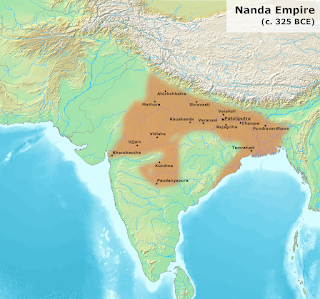
  Magadha: before Chandragupta’s period India around the 4 th century BCE was divided into numerous kingdoms and republics. The foremost among them was the Magadha Kingdom in eastern India, whose rulers beginning with King Bimbisara (543- 492 BCE) had embarked on a quest for empire building. Magadha boundaries had been much extended over time and contained a good part of central, eastern, and north India. Alexander the great (365-323 BCE) invaded India in 326 BCE and in consequence much of north-eastern India was thrown into turmoil and political chaos.                                                                                                                           ...
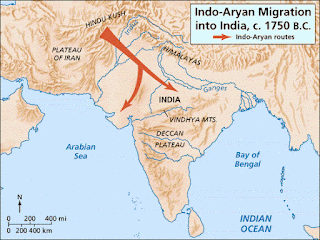
Vedic Period - The Most Enlightened Period Of Ancient India

Image
  End of Indus Valley Civilization                                There is no general agreement regarding the breakdown of Harappan urban society. While widely disputed due to a lack of fortifying evidence, scholars have proposed the following principal theories that fall under four headings. The first theory is that environmental changes, such as a shift in climate followed by agricultural devastation, resulted in the abandonment of the civilization. The second theory is that of abrupt natural changes such as floods or droughts, brought about this change. The third theory states the occurrence of an epidemic or a similar disaster. According to this theory, some natural forces compromised the fabric of society and the consequent human intervention led to its complete breakdown. The theory is that of human activities such as invasions, contributed to the abandonment of the Indus Valley cities. ...

The Chalcolithic Age : When Metallurgy Came to Rule the World

Image
            The chalcolithic period refers to that part of old-world prehistory wedged between Neolithic, and the  urban and literate societies of bronze age. This was the era when the first metal was found and it was nothing else but the copper and there was extensive use of mixture of stone and copper as stone increases strength it had been added to copper. The term Chalcolithic is a combination of two words- Chalco + Lithic was derived from the Greek words "khalkos" + "lĂ­thos" which means "copper" and "stone" or Copper Age. It is  also known as the Eneolithic or Aneolithic (from Latin aeneus "of copper") is an    archaeological period that is usually considered to be part of the broader Neolithic (although it was originally defined as a transition between the Neolithic and the Bronze Age). Copper age is associated with wide-spread Copper Metallurgy. Credits: https://www.alchemyias.com/           In ...